Instruments you can open.
Converters, amplification, transducers, capture and rooms — the whole chain, built as components you can combine as you like. Finished instruments, ready to play; the same designs as kits if you would rather build, finish or personalise your own. Published measurements with their limits stated. No marketing mysticism.
Data conversion R&D → prototype
DS-C: an alternative to delta-sigma that poses oversampled conversion as a tracking-control problem rather than a noise-shaping one. Stability by proof, and a simulated robustness advantage in tolerance and start-up.
Data conversion →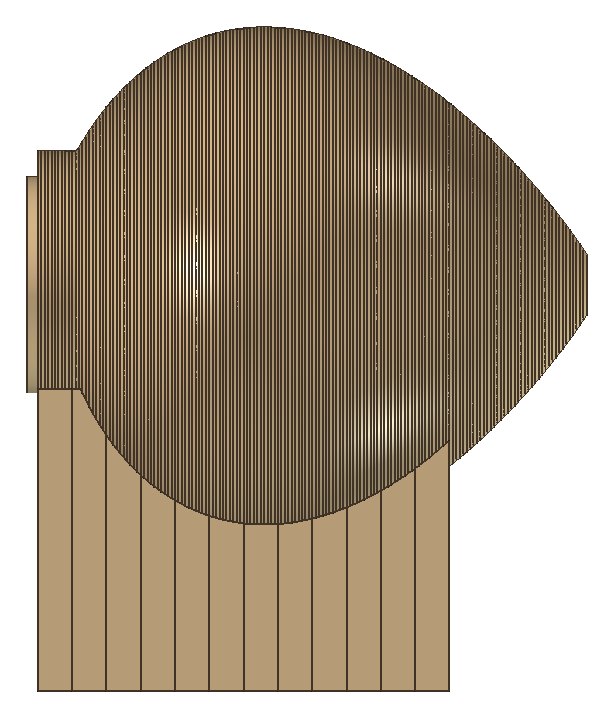
Loudspeakers Prototype-ready
Translam enclosures cut from stacked Baltic birch, built around a single full-range driver with no crossover in the satellite. Flat to roughly 20 kHz on-axis per the driver's own datasheet; satellite F3 modelled at 96–99 Hz sealed and 59–60 Hz vented, with a separate subwoofer for the bottom octaves. Shipping finished, with a kit option. No pair has been built or measured — the cut package is shop-ready and that is all.
Binaural head rig CAD complete
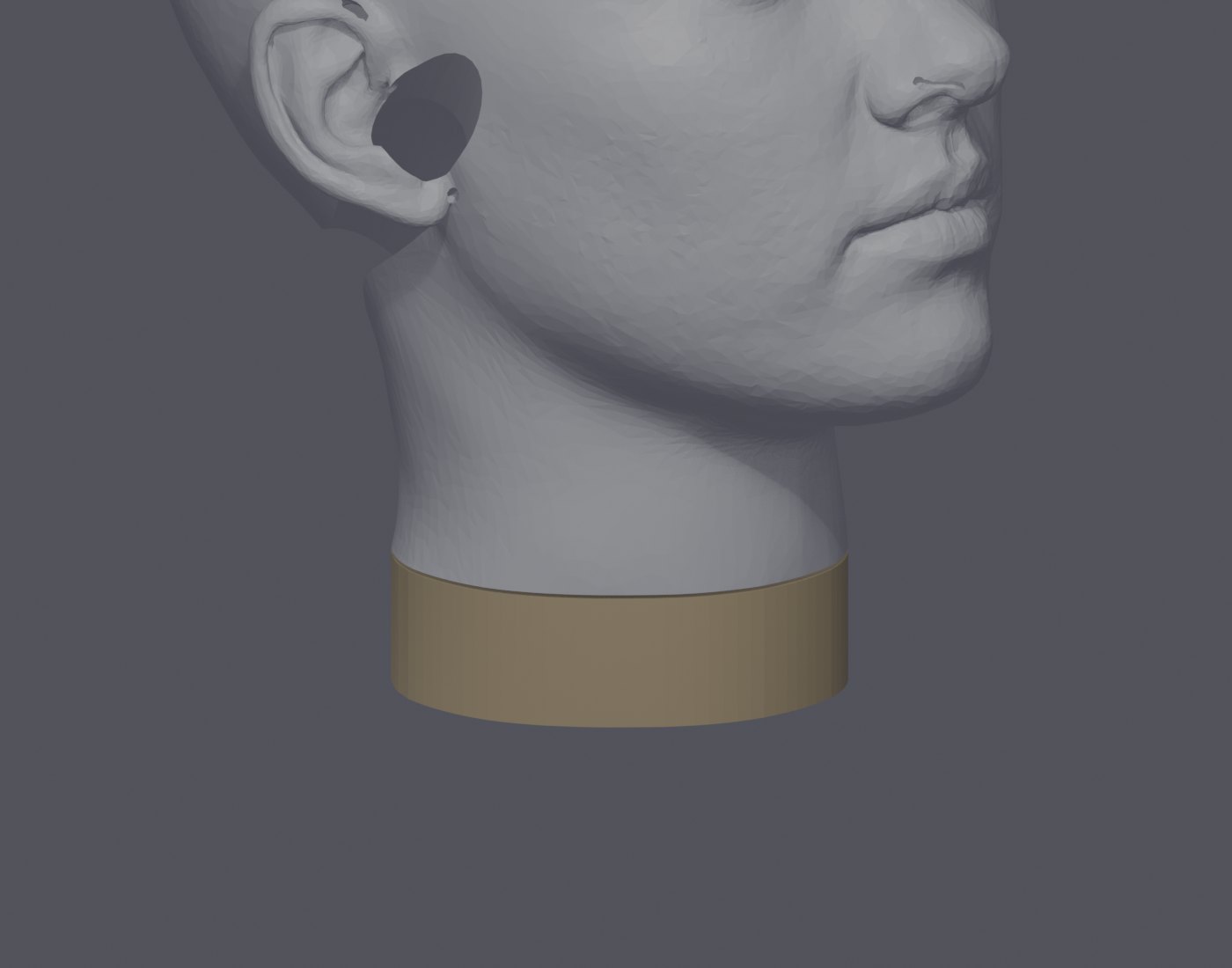
A printed head with swappable pinnae on a Baltic-birch eggcrate torso, carried on two mic stands. Recording-grade, not measurement-grade — it is a rig to hold the microphones, and we ship none: the capsule seat is a swappable insert sized to the barrel you already own or rent.
omni — room sound fields In design
Engineered sound field for untreated rectangular rooms: a central omni image anchor, delayed and shaded perimeter fills, and subwoofers on modal placement. The first install is a cafe. Nothing is measured yet, so every figure we hold is still a hypothesis.
A complete chain, built as components.
Source to speaker, every stage ours. Each is a component you can buy on its own and combine with what you already own — not a closed system that only works with itself.
| Component | What it is | Status |
|---|---|---|
| Conversion | ||
| DS-C DAC | 30.4 ENOB (184.5 dB peak SQNR; 30.7 / 186.8 dB dithered) digital-to-analogue modulator, 1-bit, DSD-native | R&D |
| DS-C stereo ADC | 27.5 ENOB (167.5 dB peak SQNR) continuous-time analogue-to-digital front end — the design of record | Board purchase-ready |
| USB microphone-preamp ADC | The ADC as a self-contained recording interface | Prototype planned |
| Amplification | ||
| Headphone preamplifier | Preamp and headphone stage on the DAC output | In design |
| Monoblock class-D amplifiers | Power amplification, one channel per box | In design |
| Subwoofer amplifier | Dedicated amplifier and protection for the subwoofer | In design |
| Playback system | Input and format detect, DSP correction and active crossover, per-channel modulators, pluggable power modules — the spine the other components hang from | Concept |
| Transducers | ||
| Loudspeakers | Translam Baltic-birch enclosures, single full-range driver, no crossover in the satellite | Prototype-ready |
| Subwoofer | Rectangular translam enclosure, offcut-only stand | Designed |
| Headphones | Our own transducer, to close the chain at the head | Exploratory |
| Capture & rooms | ||
| Binaural head | Head-and-torso rig for binaural recording and for testing headphones and rooms | CAD complete |
| omni | Engineered sound field for untreated rooms | In design |
Open by design
High-end audio has drifted toward sealed objects: glued cabinets, potted modules, firmware you cannot read, and a service path that runs through the manufacturer or nowhere. That is a bad deal for a thing you are meant to keep for thirty years.
We design in the opposite direction. Enclosures come apart. Boards are documented to the component. Upgrades are a design feature rather than an accident, and a repair does not require our permission.
Most people will want the finished instrument, and that is how these ship. Because the line is built as components rather than as one sealed box, you choose the shape of your own system — the DAC into your existing amplifier, our monoblocks under someone else's speakers, the subwoofer added two years later.
The discipline pays for itself. Designing something a person could open forces the same honesty as designing something a shop has to cut.
Choose how much of it you build
Same product, same manual, three ways in. It is a choice you make at the counter, not a property of the thing — and it is per component, so you can buy the speakers Built and the subwoofer as a Kit two years later.
| Tier | We ship | You do | What you are buying |
|---|---|---|---|
| Kit | Cut layers, hardware, drivers, manual | Stack, glue, sand, finish, wire, mount | The whole craft |
| Raw | Stacked, glued, sanded to 220 — bare birch | Finishing only: oil, wax, stain, dye, paint | Personalisation with no technical risk |
| Built | Finished, assembled, voiced, ready to play | Listen | Our bench time and our freight volume |
The tier menu carries the labour, not just the price — Raw and Built are quoted as the Kit plus the hours of our bench time that went into them. You can then decide whether your own weekend is worth more or less than ours. That is the same disclosure habit we apply to measurements, pointed at commerce.
A top-end number always carries on-axis. A satellite's low end is never merged with a subwoofer's into one range. A modulator or quantisation figure is never allowed to stand in for dynamic range. Where a number comes from a model, a simulation or a supplier's datasheet rather than from our own bench, the page says which, on the same line — and where two designs are compared, both are measured the same way or the comparison is not made.
As of August 2026 that is every number we publish. Nothing in this line-up has been built and measured yet — not a speaker pair, not a converter board. When that changes, the measurements go up whether or not they flatter the models.