Machines that are meant to be looked at.
The studio's premise is that engineering methodology can be used as an artistic one — that derivations, control laws and fabrication drawings are not scaffolding behind the work but part of it. A thesis set that argument out at length in 2015. It did not start the practice; it described one that was already running, and still is.
After School Program for Children of Immigrants
A kinetic installation for the DREAM Gallery, SUNY Polytechnic Institute (Utica, NY), opening September 2026. A collaboration with Prof. Ana Jofre (SUNY Poly).In fabrication
A driven coupled-pendulum swing breathes in a slow, hypnotic beat beside a 1970s living room, where a mock console television plays period after-school programming. A traditional playground swing, seized by a white mechanism that will not let it stop. The piece is about memory and childhood, and about the past winding the present.
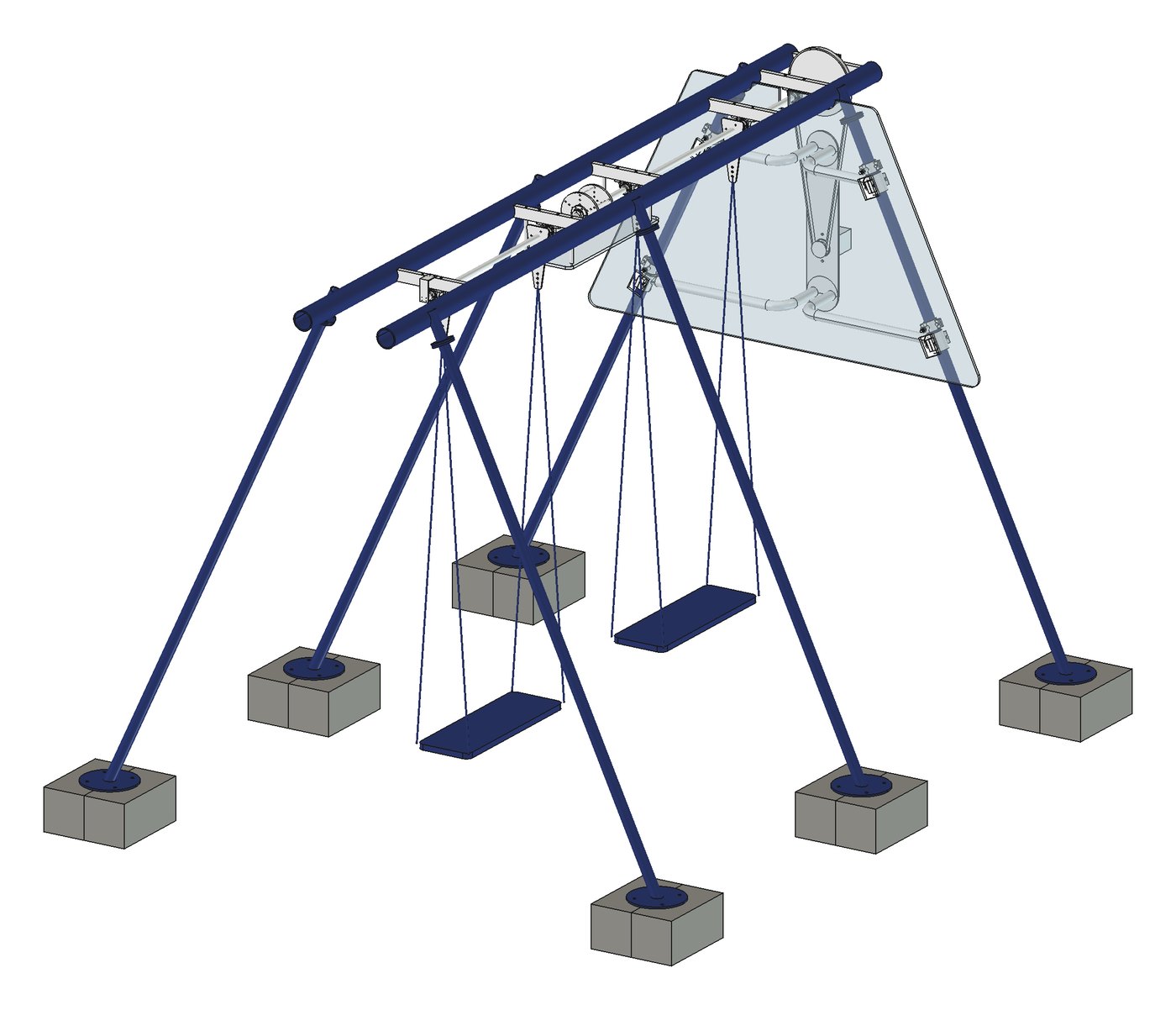
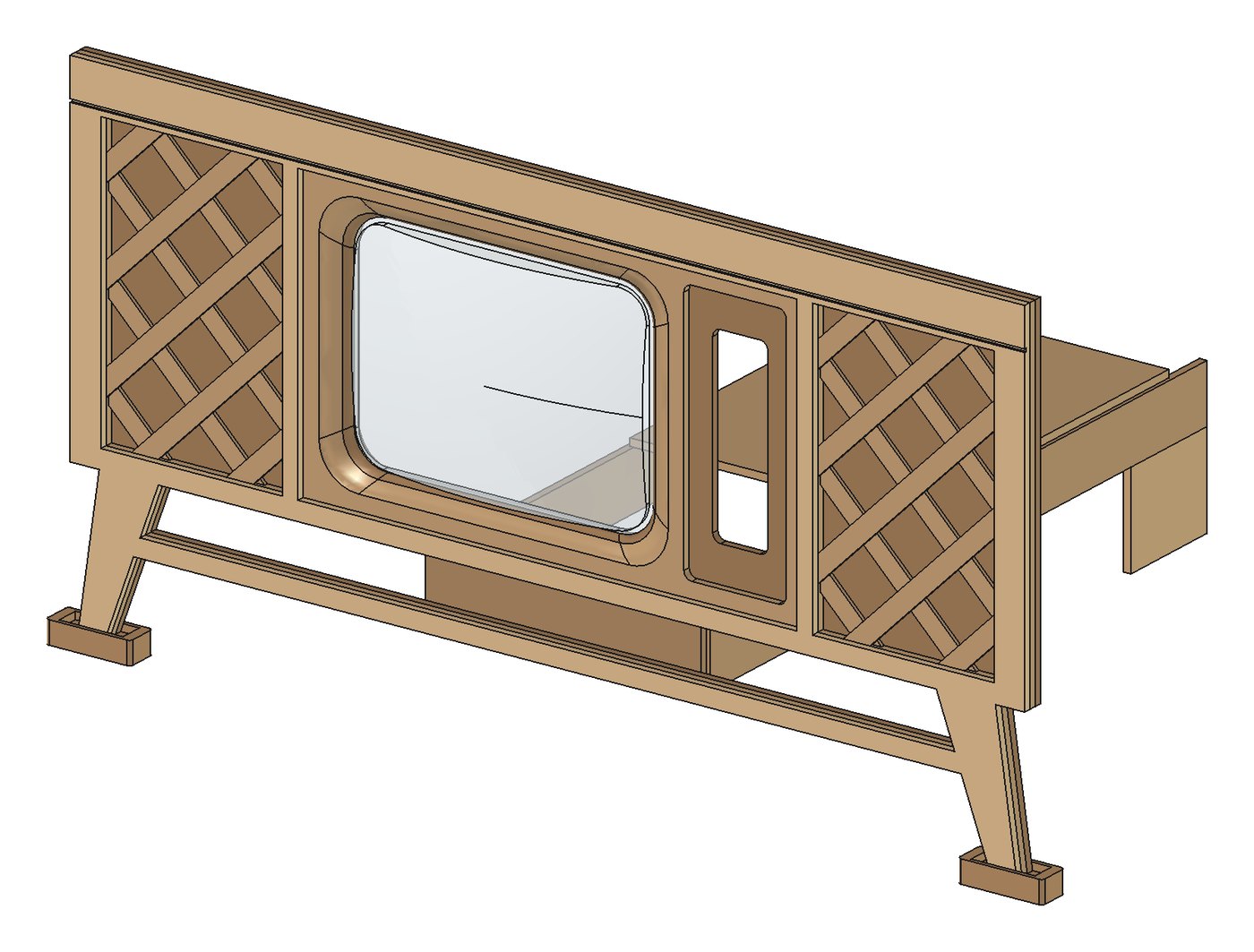
Both objects were drawn end-to-end in FreeCAD from a single parametric generator, then exported as a shop-ready cut package. The swing is a coupled-pendulum control problem before it is a sculpture — a direct descendant of the machines below.
auto-lysis: art, engineering and circulating referents
MFA solo thesis exhibition, Interdisciplinary Art, Media and Design, OCAD University. Shown at Djuna Day Studio, 45 Chauncey Avenue, Toronto, April 2015. Thesis advisor: Doug Back.
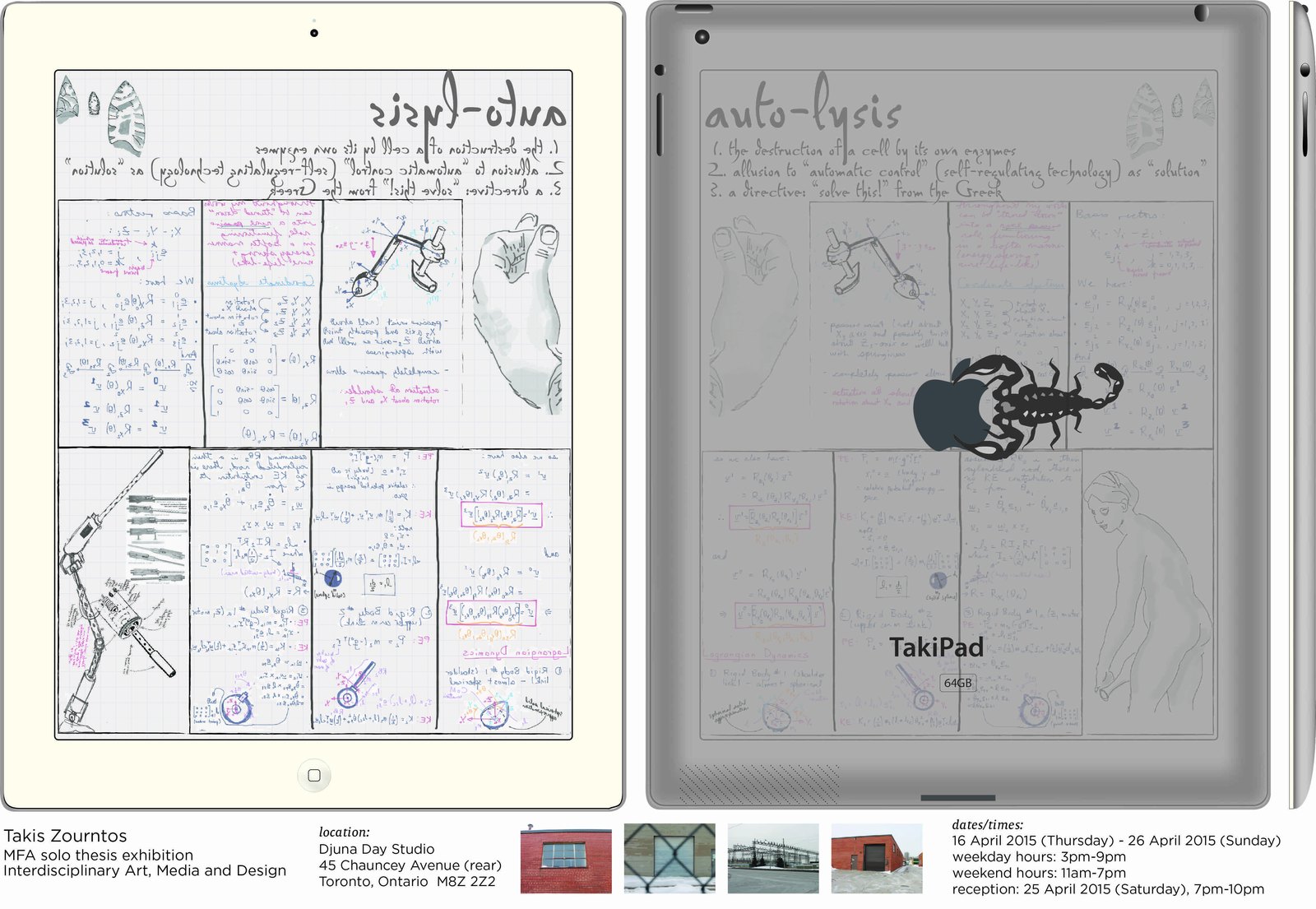
The exhibition put functioning mimetic-motion machines, concept sketches, mathematical derivations, and an array of workbench “workplinths” in one industrial room, and refused to rank them. Sited inside a working industrial complex rather than a gallery, the installation was itself an intervention — an infusion of artistic concern into the domain of knowledge labour.
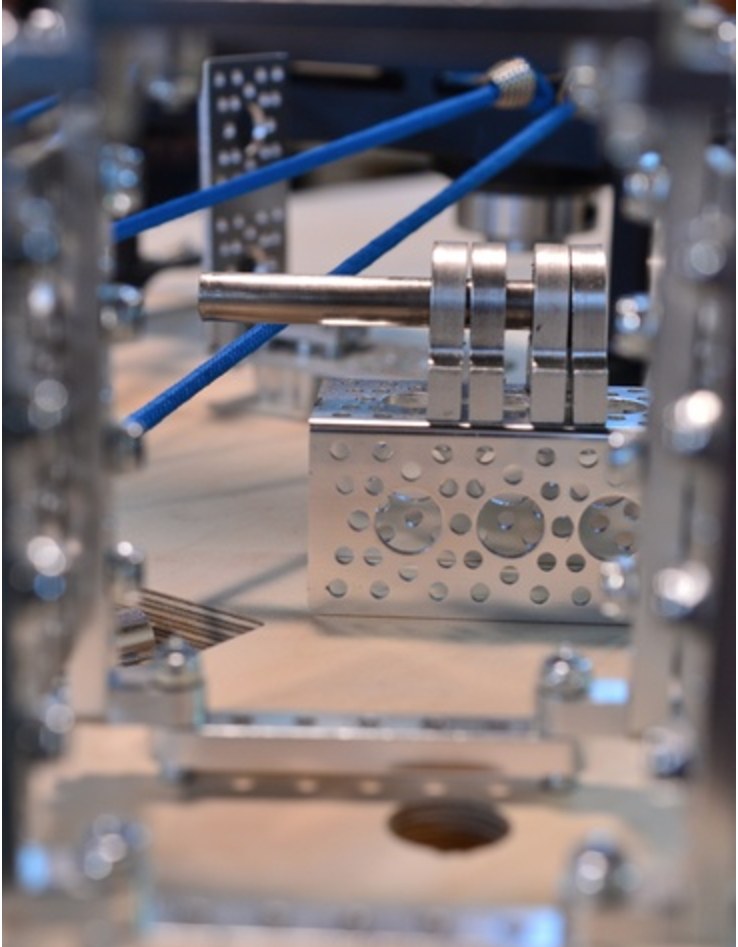
Underactuation
Both machines are underactuated — they have more joints than motors, so they cannot simply be commanded into a pose. Whatever they achieve has to propagate through the mechanism indirectly.
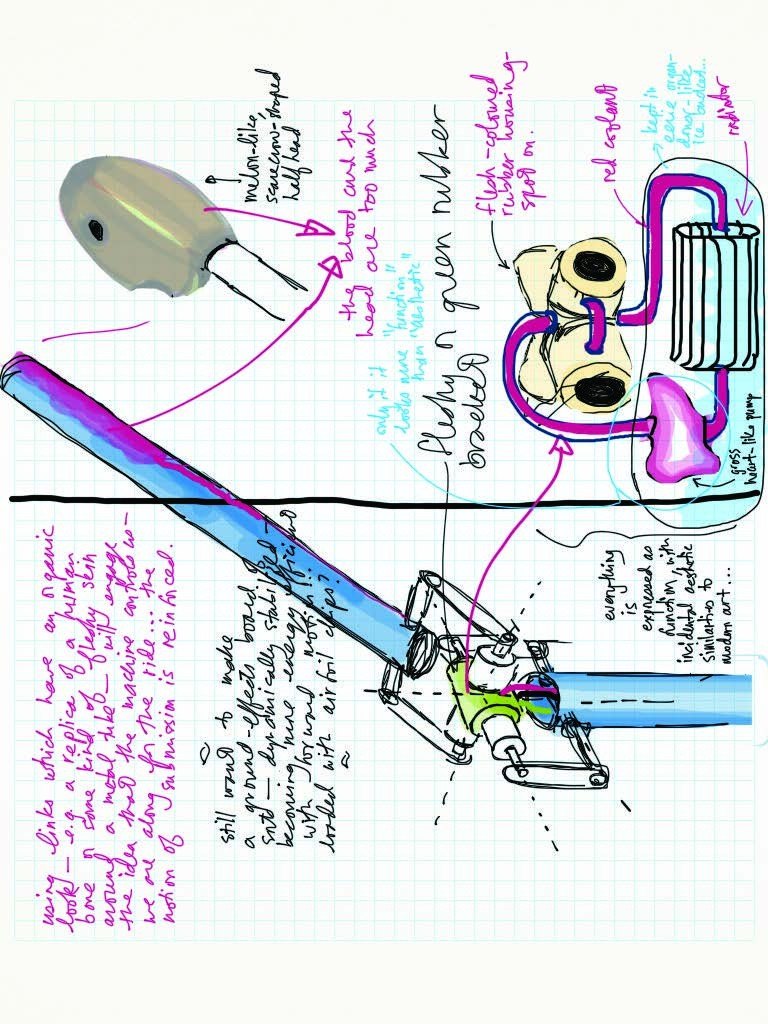
Elle Eg (2014) has a completely passive two-axis ankle and a semi-passive knee held by elastic cords, and tries to stay balanced through hip movement alone. El Bo (2014) has a passive elbow and a fully articulated passive hand that can be threaded with nylon cord to grasp. Neither machine's behaviour is scripted; it emerges from the system dynamics under a controller derived from system theory.
The underactuated machine was also the argument. A system where a single actuator among many joints has to act circuitously through the whole structure is a working model of agency inside a network — influence that arrives by propagation rather than by force.
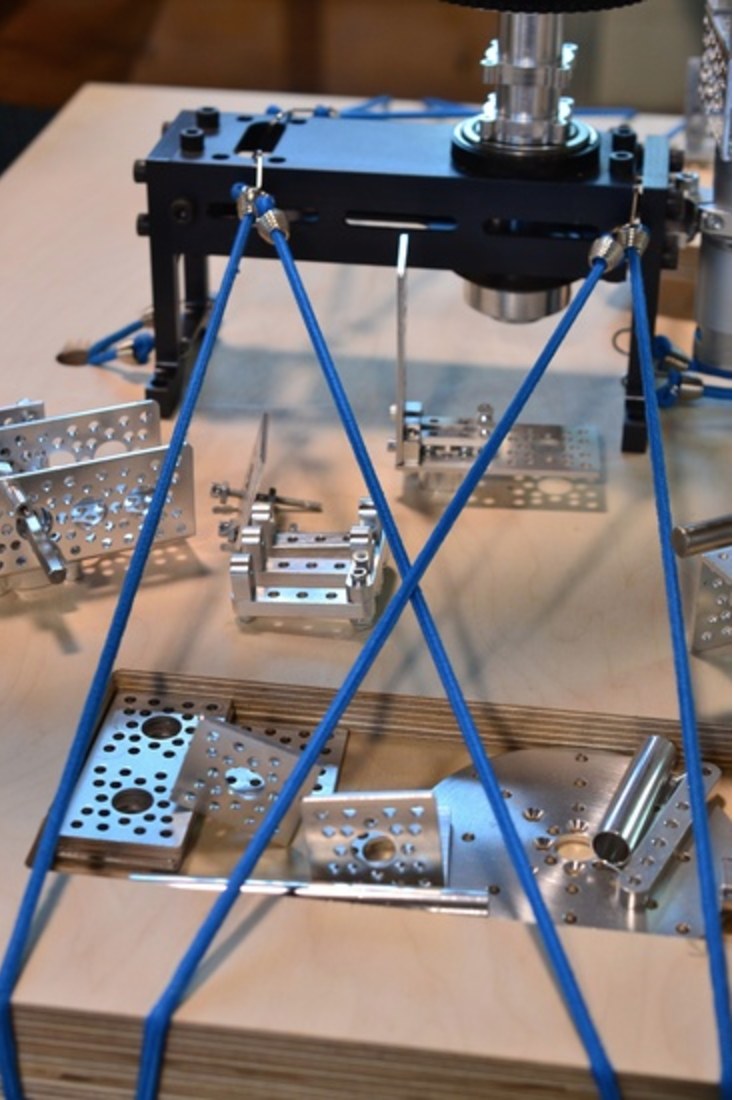
The thesis set the transparency of the work directly against what Bruno Latour called blackboxing — the way technical work is made invisible by its own success. Every piece in the show was documented in enough detail to be reconstructed from the documentation alone.
That is the same commitment the audio instruments are built on, eleven years later. It was an aesthetic position before it was a product policy.
Engineering used speculatively.
There is a tradition for this. Critical and speculative design — Anthony Dunne and Fiona Raby's term — treats a designed object as a way of asking a question rather than answering one: a thing made to think with, not to sell. The engineering equivalent is less settled, but the move is identical. Take the methods seriously, apply them properly, and point them at a question instead of a specification.
That is what the machines are for. Elle Eg and El Bo are properly engineered — derived, simulated, machined, controlled — and they are not for anything. Each is built around one specific physical task, standing or striking, and the viewer is left to work out why. The rigour is not decoration applied to an art object; it is the instrument the question is asked with.
It runs both ways, and it always has. The artistic disposition here did not arrive with a degree — it goes back as far as the engineering does, and the thesis was an attempt to reconcile two things that were already both true rather than to add one to the other.
Which is why the converter work is not an engineering result with an artistic gloss applied afterwards. Asking whether oversampled conversion had to be done the way everyone does it is an artist's question. It was asked with a control theorist's tools and it turned out to have a commercial answer — but the question came first, and it came from the same place the machines did.
Both pieces were designed and tuned as working control systems before anything was fabricated — the mechanism, the actuator and the loop around them simulated together.
Engineered to gallery tolerances
Work that runs unattended in a public room has a safety case, guards, and a failure mode chosen on purpose. That work happens at design time, in the model, not on the gallery floor during install week.
Fabrication package, not a sketch
Every piece leaves as STEP plus 2D cut geometry, a bill of materials, and a nested sheet layout. A shop can quote it without a conversation.
Documented to be rebuilt
Assembly manuals with rendered step figures, so the piece can be built, struck, and rebuilt by a crew that has never seen it before — and so that the mechanism stays legible rather than sealed.